South Africa’s Economic Outlook Weakens Further as Global Risks Intensify
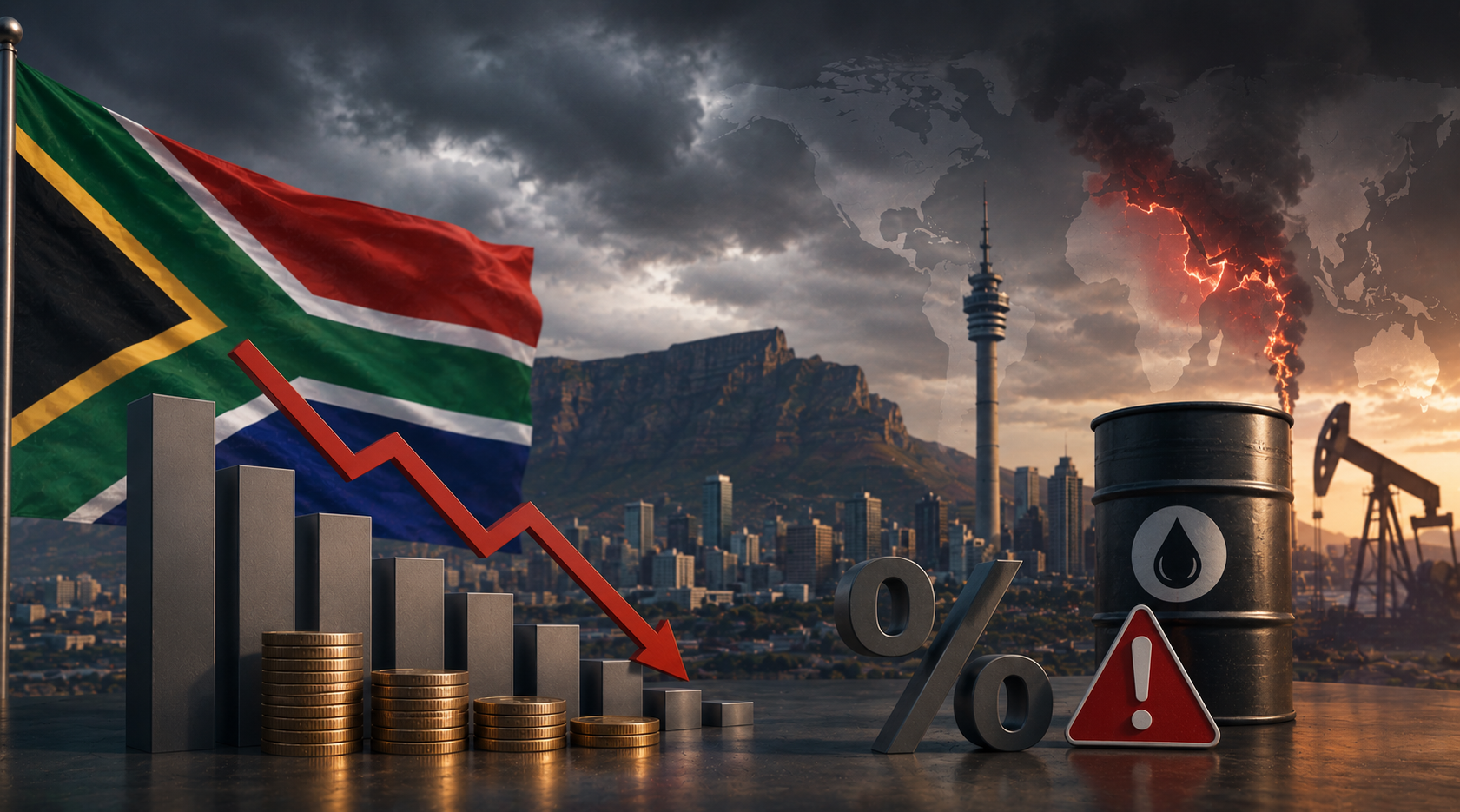
South Africa’s economic outlook has become increasingly fragile as global geopolitical tensions and rising oil prices continue to weigh on both local and international markets, according to the latest BMR/Unisa Economist of the Year (EoY) Competition forecasts.
The April 2026 estimates reveal a significantly more cautious outlook for the economy, with economists forecasting slower growth, higher inflation, weaker household spending and a more uncertain interest rate environment. South Africa’s real GDP growth forecast for 2026 has now been revised downward to 1.3%, while inflation expectations have climbed to 3.9%. Economists also expect higher interest rates and slower employment growth as global uncertainty intensifies.
Geopolitical Tensions Driving Economic Uncertainty
A major factor behind the worsening outlook is the prolonged conflict in the Middle East and its impact on global energy markets.
Economists participating in the competition highlighted growing concerns around disruptions to shipping routes, global energy supply chains and geopolitical stability. These risks are contributing to sustained volatility in oil prices and financial markets worldwide.
Brent crude oil prices are now expected to average US$75 per barrel in the fourth quarter of 2026 substantially higher than earlier forecasts. Higher fuel prices are expected to place additional pressure on inflation globally and domestically, while reducing the likelihood of further interest rate cuts. Some economists even warned that the current environment could increase the possibility of future interest rate hikes if inflationary pressures persist.
Local Improvements Not Enough to Offset Global Headwinds
Despite mounting global pressures, economists acknowledged that several domestic developments are helping to support the South African economy. These include:
- Improved electricity supply
- Ongoing structural reforms in energy and logistics
- Relatively resilient financial markets
However, economists generally agree that these positive developments are still being outweighed by weak global demand, fiscal pressures and ongoing logistics constraints.
Professor Carel van Aardt, EoY Project Lead, said the latest forecasts reflect a far more vulnerable global economic environment. “Rising geopolitical tensions and elevated oil prices are expected to place considerable pressure on inflation, economic growth and consumer spending both internationally and domestically.”
Ms Jacolize Meiring, member of the EoY Adjudication Committee, added that global developments are now playing a far greater role in shaping South Africa’s domestic economy. “While there are encouraging signs of structural improvement locally, elevated oil prices, inflation risks and weaker global growth are expected to continue constraining economic recovery during 2026.”
Key Forecast Changes from March to April
According to the economic outlook comparison, several key indicators deteriorated further between March and April 2026:
- GDP growth revised down from 1.5% to 1.3%
- Inflation increased from 3.6% to 3.9%
- Prime interest rate forecast increased from 10.0% to 10.3%
- Brent crude oil forecast increased from US$70 to US$75 per barrel
- Household consumption growth revised lower from 2.0% to 1.8%
- Employment growth reduced from 1.0% to 0.8%
The rand is expected to weaken slightly to around R16.53 against the US dollar, while bond yields are forecast to remain elevated due to persistent fiscal and geopolitical risks.
Economists expect:
- Slower economic growth
- Higher inflationary risks
- Reduced scope for interest rate cuts
- Continued pressure on household finances
- Increased exposure to global geopolitical developments
Several participants cautioned that prolonged instability in global energy markets could result in more persistent inflationary pressures than currently anticipated.
Although some improvement in domestic economic fundamentals has been acknowledged, economists broadly agree that South Africa’s growth outlook remains highly vulnerable to external shocks and continued global economic weakness.
Economist of the Year Competition Continues to Provide Key Insights
The BMR/Unisa Economist of the Year Competition remains an important platform for assessing the economic forces shaping South Africa’s future.
Beyond forecasting, the initiative contributes by providing:
- Evidence-based economic insights for policymakers and businesses.
- A platform for informed discussion on economic risks and opportunities.
- Greater public understanding of how global developments affect domestic economic conditions.
In an increasingly uncertain and interconnected world, the competition continues to serve as a valuable barometer of economic expectations and informed economic commentary in South Africa.
