South Africa’s Economic Outlook Turns More Cautious Amid Growing Global Uncertainty
South Africa’s economic outlook has become more fragile as global uncertainty intensifies, according to the latest forecasts from the Bureau of Market Research (BMR)/Unisa Economist of the Year (EoY) Competition.
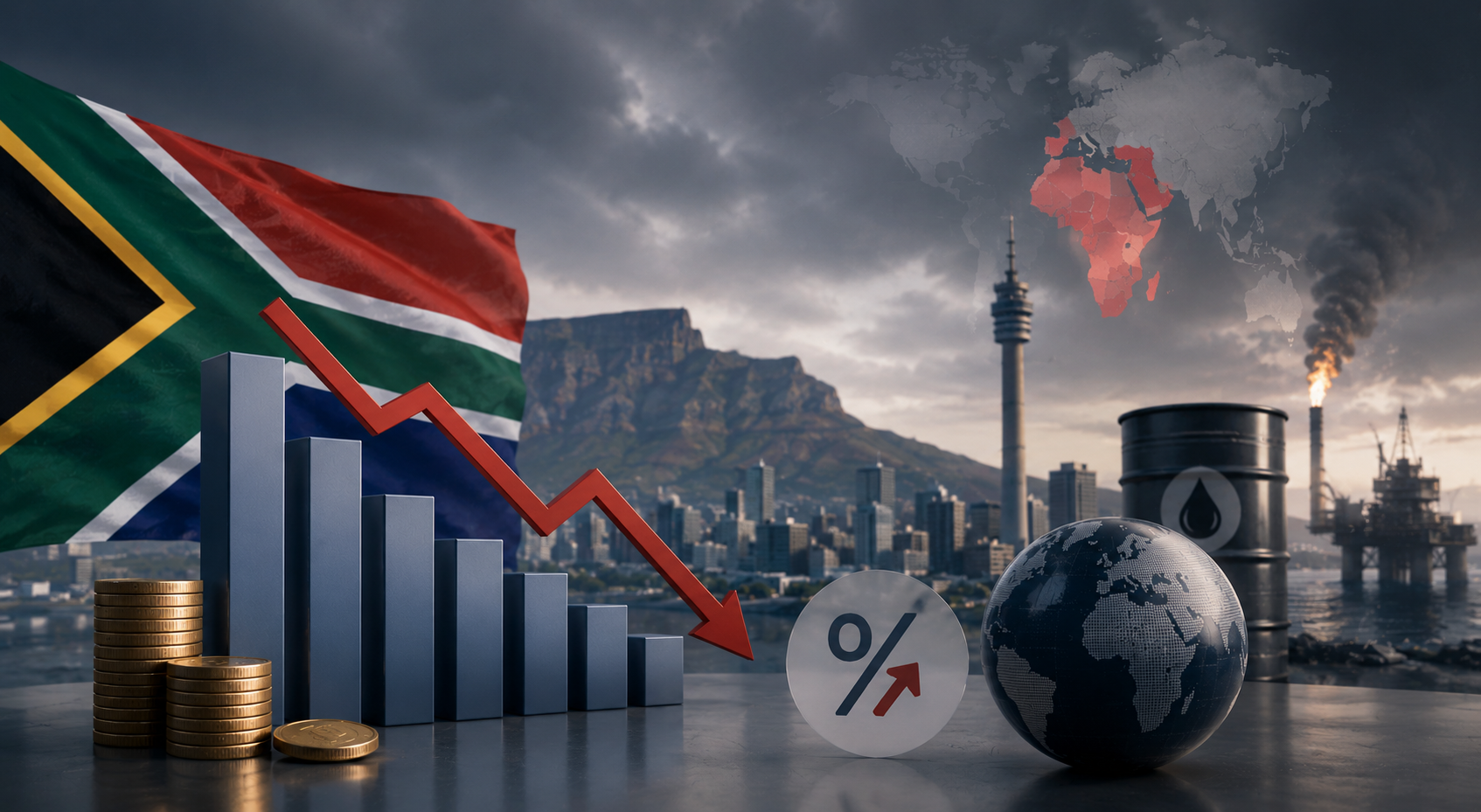
The March 2026 estimates reveal a slightly weaker growth outlook, rising inflation concerns and increasing pressure from global geopolitical developments, particularly the ongoing conflict in the Middle East.
Economists now expect South Africa’s real GDP growth to slow to 1.5% in 2026, down from the 1.6% forecast in February. Inflation expectations have also edged higher to 3.5%, reflecting mounting concerns over oil prices, global trade disruptions and slowing international economic growth.
Global Risks Begin to Shape Local Economic Conditions
One of the biggest drivers behind the revised outlook is the sharp increase in global oil prices linked to geopolitical tensions in the Middle East. Economists warn that continued instability could have far-reaching effects on inflation, trade flows and global financial markets.
At the same time, expectations for global economic growth have weakened, potentially affecting South Africa’s export performance and broader economic activity.
Despite these challenges, the rand has remained relatively stable against the US dollar, suggesting that investor confidence has not deteriorated significantly. Professor Carel van Aardt, EoY Project Lead, noted that global developments are increasingly shaping South Africa’s economic trajectory. “The latest forecasts reflect an economy that is still recovering, but at a slower and more uncertain pace. Global developments, particularly geopolitical tensions, are now playing a much bigger role in shaping South Africa’s economic outlook.”
Inflation and Interest Rate Concerns Intensify
Although inflation remains within the South African Reserve Bank’s target range, upward pressure from oil prices is creating new risks for policymakers. The March forecasts show:
- Consumer inflation rising from 3.4% to 3.5%
- The prime interest rate forecast increasing from 9.8% to 10.0%
- Brent crude oil prices jumping from US$64 to US$70 per barrel
Economists believe this could delay further monetary easing as the Reserve Bank remains concerned about the inflationary impact of geopolitical instability. Professor Deon Tustin, CEO of the BMR, said policymakers now face a delicate balancing act. “While inflation remains relatively contained, upward pressure from oil prices and global uncertainty means policymakers will need to remain cautious. The environment calls for careful balancing between supporting growth and maintaining price stability.”
Household Recovery Remains Under Pressure
The forecasts also point to slower growth in household spending.
Real household consumption expenditure growth has been revised down slightly from 2.1% to 2.0%, indicating that consumers are still under financial pressure despite lower inflation levels. Meanwhile, employment growth remains unchanged at a modest 1.0% for the fourth quarter of 2026, reflecting the subdued pace of economic expansion and South Africa’s ongoing structural employment challenges.
Key Economic Indicators Shift in March
The updated forecasts reflect a more cautious economic environment overall. The March estimates indicate:
- Slower GDP growth
- Higher inflation expectations
- Rising oil prices
- A weaker global growth outlook
- A more cautious interest rate environment
Global GDP growth expectations have also been revised downward from 3.1% to 2.9%, highlighting concerns about the broader international economy and the possible long-term effects of geopolitical tensions.
Downside Risks Increasing
Economists participating in the competition emphasised that the outlook remains highly dependent on how geopolitical tensions evolve over the coming months.
Even if tensions ease, their economic effects are expected to continue filtering through global markets for some time. According to participants, downside risks now appear more prominent than upside surprises. The report also notes that the underlying political, social and economic complexities surrounding the Middle East conflict make a near-term resolution unlikely.
The Value of the Economist of the Year Competition
The BMR/Unisa Economist of the Year Competition continues to provide valuable insights into the forces shaping South Africa’s economic future. Beyond forecasting, the competition offers:
- Credible, data-driven insights for policymakers and businesses
- A platform for informed debate on economic risks and opportunities
- Greater public understanding of global and local economic trends
In an increasingly uncertain global environment, the competition remains an important barometer of economic expectations and decision-making in South Africa.
